
From psychiatric hospitals to mental health clinics and private therapy sessions, one cannot overlook the importance of art in the treatment of mental illness. But what exactly is art therapy, and is it still useful in this modern age?
I can personally say that I have experienced art therapy in all three settings and have found it superbly useful in dealing with and improving my mental health. It remains today one of my favorite forms of treatment and definitely the most enjoyable.
But why is art therapy so effective?
To begin with, art therapy is a form of psychotherapy that uses creative expression to help people understand and communicate their emotions, thoughts and experiences. It can involve drawing, painting, sculpture, collage, music and other creative activities. Although these different art forms can be therapeutic, professional art therapy specifically involves using visual art within a therapeutic relationship.
Unlike traditional talk therapy, where patients are expected to communicate their feelings through conversation, art therapy allows people to express themselves visually. Sometimes a picture can communicate what a thousand words cannot.
For someone like myself, who has spent much of his life drawing, painting, writing books and composing music, this approach seems perfectly natural. Art has always been my preferred language of expression. Whether I'm painting a watercolor, illustrating a graphic novel or writing a song, I am communicating something about myself and the world around me.
However, there is a difference between creating art for an audience and creating art for therapy.
When I create artwork professionally, I often consider composition, technique, originality and whether the finished product will appeal to someone else. I may want to exhibit it in a gallery, publish it in a book or sell it at an art festival. In art therapy, those concerns become secondary. The purpose is not necessarily to create a masterpiece but to explore the feelings and experiences behind the artwork.
There are no critics, no gallery owners and no customers waiting to judge the results. There is simply the artist, the artwork and the opportunity to discover something about oneself.
Having spent time in psychiatric hospitals, I know firsthand how difficult and frightening those environments can sometimes be. Patients may be struggling with depression, anxiety, psychosis or other serious mental health conditions. The days can feel long, and the experience of hospitalization can leave someone feeling powerless.
Art therapy offers something different. It gives patients an opportunity to make choices, express themselves and accomplish something creative. Even a simple drawing can provide a sense of personal freedom in an otherwise highly structured environment.
In clinics and private therapy sessions, the benefits can be equally meaningful. Artwork can become a starting point for discussing emotions and experiences that might otherwise be difficult to explain. It can also provide relaxation, concentration and a temporary escape from overwhelming thoughts.
Of course, art therapy is not a miracle cure. It does not necessarily replace medication, psychiatric care or other forms of treatment. Nor does everyone respond to it in the same way. But for many people, including myself, it can be an extremely valuable addition to a broader mental health treatment program.
I also believe there is something important about the relationship between creativity and mental illness. Throughout history, artists have used their personal struggles as inspiration for their work. Pain, confusion, isolation, happiness and even moments of extraordinary imagination have found their way onto canvases, into books and through musical instruments.
This does not mean that mental illness automatically makes someone a better artist. Nor should suffering be romanticized as a requirement for creativity. Rather, art provides a means of transforming personal experiences into something meaningful.
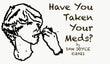
Much of my own artwork, music and writing deals with mental health awareness. My graphic novels, including Have You Taken Your Meds? and The Unlikely Prophet, explore experiences and ideas that are deeply personal to me. Through these projects, I attempt not only to entertain but also to communicate what living with mental illness can be like.
In that sense, my creative work has become a form of personal therapy, even when I am not participating in a formal art therapy session.
And perhaps that is one of the most appealing things about art. You don't have to be a professional artist to benefit from making it. You don't need a university degree, an expensive set of paints or a gallery exhibition. A pencil and a piece of paper can be enough to begin.
In today's modern world, with digital tablets, computers and sophisticated creative software, the possibilities for artistic expression have expanded enormously. People can paint digitally, compose music on their computers, create animations or write and illustrate entire books without ever leaving their homes.
Technology has changed the tools, but it has not changed the fundamental human desire to create and communicate.
I believe art therapy remains as relevant today as it has ever been. In a world increasingly concerned with mental health awareness, we should recognize the importance of creativity not only as entertainment or commerce but also as a means of emotional expression and personal growth.
For myself, art has been a profession, a passion, a source of income and a lifelong adventure. But perhaps one of its greatest contributions has been helping me through some of the most difficult periods of my life.
I don't believe every painting needs to be sold, every song needs to be heard or every book needs to become a bestseller. Sometimes the greatest value of a work of art lies in what it does for the person creating it.
And if a drawing, painting or piece of music can help someone understand themselves a little better, find some peace or simply enjoy an otherwise difficult day, then I would consider that a success.
Art doesn't always have to change the world. Sometimes changing the way we experience our own world is more than enough.
by Dan and Bonkers
SUPPORT MENTAL HEALTH AWARENESS TODAY!!!


