
For most of my life, I have been involved in the arts in one form or another. Whether it is painting, drawing, illustrating, writing books, comedy or composing and recording music, creativity has always been a major part of who I am. But there is something else that has played an equally significant role in my life, and that is mental illness.
I have been diagnosed with schizoaffective bipolar disorder, a condition that has affected my life in ways that are sometimes difficult to explain. I have experienced psychosis, depression, mania, hospitalization and the challenges of living with a serious mental illness. But rather than allowing these experiences to define me entirely, I have chosen to make them part of my creative expression.
My art, music and illustrated books are based, at least in part, on mental health awareness. However, I don't consider myself simply a mental health advocate who happens to be an artist. I consider myself an artist who has something to say about mental health, along with many other subjects.
There is a difference.
Art as Personal Expression
As a painter, poet and illustrator, I have always believed that art should be more than a demonstration of technical skill. A painting doesn't have to look like a photograph to be successful. It should communicate something about the artist's imagination, emotions, observations or personal experiences.
Much of my artwork is expressive rather than realistic. I am interested in the human condition, the imagination and the unusual ways people perceive the world. My experiences with mental illness have certainly influenced these interests, but they are not the only things that inspire me.
I enjoy painting portraits, experimenting with different styles and studying the work of other artists. Sometimes my paintings are humorous. Sometimes they are disturbing. Other times they are simply beautiful to me. My most successful series is 50 people who have suffered mental illness based on a long list I found in a flyer by the National Alliance on mental illness. From Plato to Britney Spears I made 50 expressive watercolor portraits from the list
I don't believe every painting needs to carry a social message. Sometimes art can exist simply because the artist enjoys creating it.
However, when I do address mental illness in my artwork, I hope it encourages people to look beyond stereotypes and recognize the humanity of those who live with psychiatric conditions.
Writing My Own Story
My books are perhaps the most direct examples of how I use creativity to discuss mental health.
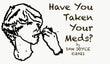
One of my major projects is my autobiography and graphic novel, Have You Taken Your Meds? The title itself raises an interesting question. For someone living with mental illness, those five words can become a familiar part of everyday life.
But behind those words is an entire person with thoughts, feelings, ambitions, relationships and a personal history.
Through storytelling, illustrations, humor and personal experiences, I attempt to communicate what it is like to live with a mental illness from the inside rather than simply describing it from a medical perspective.
I have also worked on The Unlikely Prophet, another graphic novel series that explores my imagination, personal experiences and unconventional ways of looking at the world.
I believe that people who have experienced mental illness should have the opportunity to tell their own stories. Too often, those stories are told by doctors, psychologists, journalists or family members. Although their perspectives may be valuable, they cannot completely replace the voice of the person who has actually lived through the experience.
That is where autobiography, fiction, poetry, songwriting and graphic novels become important.
They allow us to tell our stories in our own words.
Music and Mental Health
Music is another important part of my creative life. Over the years, I have recorded more than fifteen albums, experimenting with songwriting, singing, guitar and different musical styles.
I don't consider myself a great singer or guitarist, and I certainly don't expect everyone to enjoy my music. In fact, music may be the one art form I practice primarily for myself.
But that doesn't make it any less important.
Music allows me to express feelings and ideas that might not translate easily into a painting or a book. Sometimes the lyrics are personal. Sometimes they are philosophical, humorous or experimental.
Mental illness has influenced my music, just as it has influenced my writing and painting. However, I don't believe an artist needs to be mentally ill to create meaningful art, nor do I believe mental illness automatically makes someone more creative.
Creativity requires imagination, curiosity, practice and dedication. Mental illness can sometimes interfere with all of those things.
The romantic image of the tortured artist may sound appealing, but the reality of serious mental illness can be frightening, exhausting and disruptive.
I would much rather be a healthy, productive artist than suffer for the sake of making art.
Mental Health Awareness Without Losing Artistic Freedom
One of the challenges of creating work based on mental health awareness is that people sometimes expect you to become a spokesperson for a particular cause or organization.
I don't see my work that way.
I am an independent artist, author and musician. I don't represent a hospital, psychiatric organization or political movement. My opinions are my own, and my experiences belong to me.
I also don't believe that creating art about mental illness means every piece of work must be educational, inspirational or politically correct.
Art should be allowed to question, provoke, entertain and even offend. Humor, satire and exaggeration are important parts of creative expression.
If I want to make a serious statement about psychiatric hospitalization, I should be free to do so. If I want to make a joke about my own experiences, I should have that freedom as well.
And if I want to paint a landscape, write a love song or illustrate a completely fictional story that has nothing to do with mental health, I should be able to do that too.
Mental illness is part of my life, but it is not the entirety of my identity.
Is Selling My Story Selling Out?
Occasionally, I encounter people who question whether selling books, paintings or music based on personal experiences with mental illness is appropriate.
My response is simple: Why shouldn't it be?
Artists have been using their personal lives as inspiration for centuries. Writers publish memoirs. Musicians compose songs about heartbreak, addiction and personal struggles. Painters create self-portraits that reflect their emotional states.
There is nothing inherently dishonest about earning money from personal expression.
I spend considerable time writing, illustrating, painting, recording, printing books and participating in art shows and conventions. These activities require effort, dedication and financial investment.
Selling my work allows me to continue creating it.
I don't believe that making money from art automatically compromises its integrity. The important question is whether the artist remains truthful to their own vision.
I am not selling mental illness. I am selling the creative work that has come out of my experiences with it.
There is a significant difference.
Art, Recovery and the Future
I have often found that working on a painting, illustrating a graphic novel or recording a song gives me something meaningful to concentrate on.
Creativity provides structure, purpose and a sense of accomplishment. It gives me goals to work toward and projects to look forward to.
However, I don't consider art a substitute for professional mental health treatment. Therapy, medication when appropriate, medical care and personal support can all play important roles in managing serious psychiatric conditions. However there is art therapy and art groups are commonly found in clinics and hospitals.
For me, art is another part of building a meaningful life.
I also want to continue learning. Whether that means improving my guitar playing, taking singing lessons, experimenting with new painting techniques or developing another book, I believe an artist should remain a student throughout life.
There is always something new to discover.
And perhaps that is one of the most important lessons I have learned from my experiences with mental illness. Life doesn't necessarily follow the plans we make for ourselves. Sometimes we encounter obstacles that seem impossible to overcome. But that doesn't mean we have to stop growing, learning or creating.
The Artist Beyond the Diagnosis
Ultimately, I hope people who encounter my artwork, books and music will recognize that mental illness does not eliminate a person's creativity, intelligence, humor or individuality.
People with psychiatric conditions are not all alike. We have different personalities, abilities, interests and ambitions. Some of us are artists. Others are teachers, scientists, business people, musicians or writers.
We are individuals first.
My goal is not necessarily to convince everyone to agree with my opinions or appreciate everything I create. Art is subjective, and I understand that my work will not appeal to everyone.
What matters to me is having the freedom to create it, share it and, when possible, sell it.
I want people to appreciate my work because they find it interesting, entertaining, thought-provoking or emotionally meaningful, not simply because I have a psychiatric diagnosis.
Mental health awareness is an important part of my creative identity, but artistic freedom is equally important.
I am a painter, an illustrator, an author and a musician. I also happen to live with mental illness.
And I intend to continue making art about all of it.
by Dan and Bonkers
SUPPORT MENTAL HEALTH AWARENESS TODAY!!!


